
The Public Hears A “97% Consensus” Has Settled Every Question on Climate. Serious Experts Say Otherwise!
Guest Post from Vijay Jayaraj at the CO2 Coalition.
On Sunday, March 29, at 9 p.m., a new documentary titled Unsettled will air on Newsmax, bringing together Steve Koonin, John Clauser, Will Happer, Gregory Wrightstone and Department of Energy Secretary Chris Wright.
The film will give viewers a rare chance to hear, in one place, the case these scientists make against the climate emergency storyline and for a more balanced, pro‑human, pro‑energy approach to environmental stewardship. Below is more context from Vijay:
Climate science has been a field where funding streams, media narratives and activist pressure often dictate which questions are allowed and which careers survive. The result is a crisis of integrity that threatens energy security and the credibility of science itself.
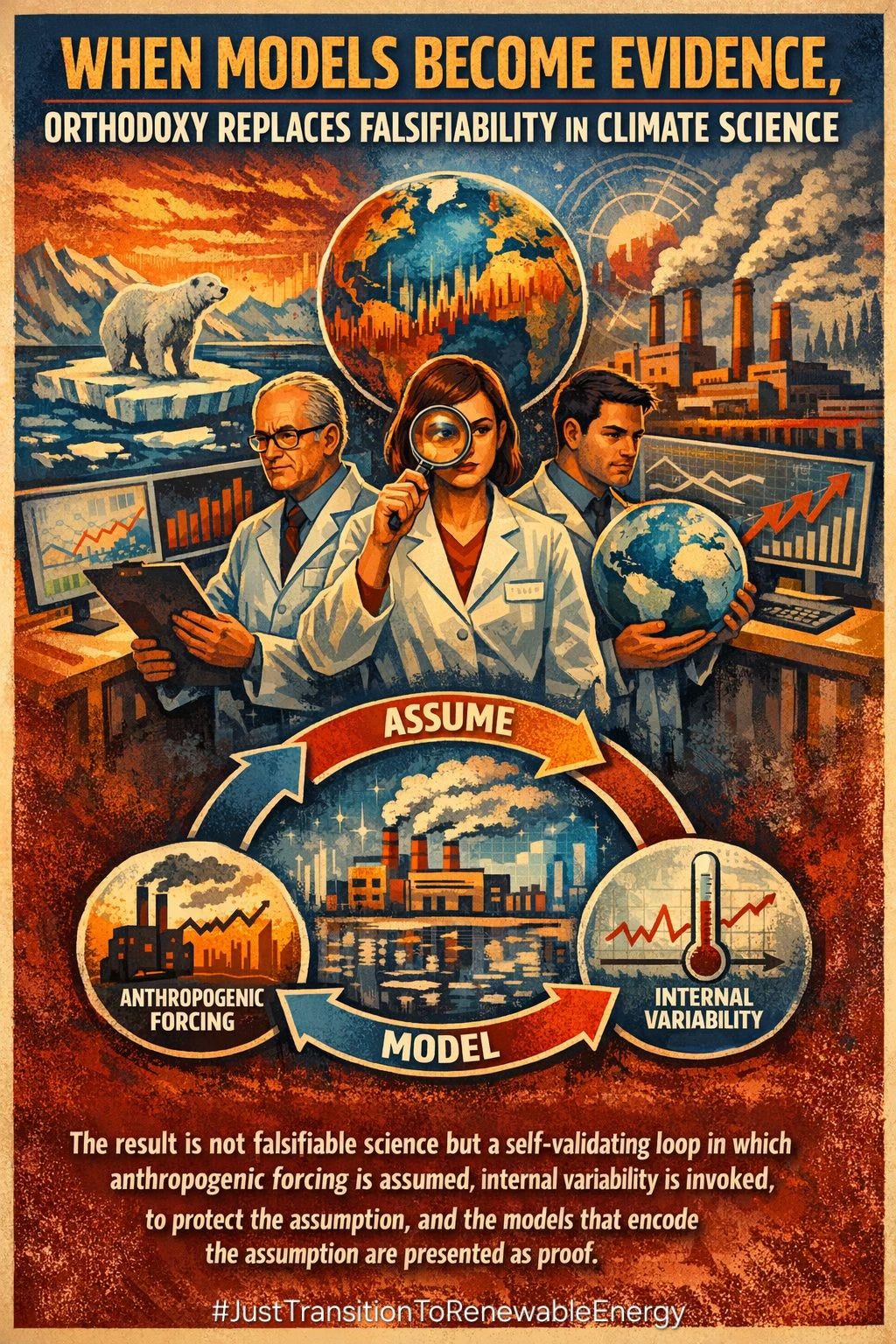
The public hears that a “97% consensus” has settled every major question on climate. Yet serious experts say otherwise. Steven Koonin, a computational physicist with more than 50 years in academia, government and the private sector, argues that the claim “climate science is settled” is more slogan than science.
His critique is not that climate never changes or that humans play no role. Rather, Koonin, a former senior official in the Obama administration, says the public message overshoots the underlying science –often stripping away nuance, exaggerating confidence and overlooking uncertainties in climate models and observational records.
The climate has always changed, sometimes rapidly, and policy decisions must grapple with that long record rather than cherry‑picked snapshots of the past, he says.
William Happer, a physicist known for foundational work in optics and decades of service at Princeton University, describes how government funding has shaped what climate questions can even be safely researched. He notes that grants overwhelmingly have favored projects that support a “climate emergency” storyline, making it risky for younger scientists to pursue work that might undermine that narrative.
Happer draws a sharp distinction between high‑quality observational programs and the computer models that dominate climate headlines. Satellite measurements and ground‑based networks provide valuable data on temperature and atmospheric radiation and composition. Yet predictive climate models often inject questionable feedbacks, especially around water vapor and clouds, to generate more dramatic warming projections.
John F. Clauser, awarded the 2022 Nobel Prize for pioneering work in quantum information, has bluntly described the “usual narrative on climate change” as a “dangerous corruption of science” that threatens the global economy and the well‑being of billions.
In his view, cloud cover – blanketing roughly two‑thirds of Earth at any given time – acts as a powerful thermostat, reflecting sunlight and helping regulate surface temperature in ways far stronger than the influence of CO2.
While the public hears constant talk of climate breakdown, satellites tell a calmer story. Geologist Gregory Wrightstone points to a large body of work showing that the Earth has been greening in recent decades, with 25–50% of vegetated land area experiencing increased leaf area.
Increased plant fertilization by higher concentrations of CO2, alongside modest warming and improved agricultural practices, is a key driver of greening. Wrightstone notes that earlier warm periods in the historical and geological record were warmer than today and often coincided with rising civilizations, while cooling phases lined up with crop failures and social decline.
One reason Koonin, Happer, Clauser or Wrightstone are rarely part of mainstream discussions is that the climate establishment has built an enforcement culture. Skeptics of the dominant narrative are labeled “fossil fuel shills,” regardless of professional reputations or funding sources.
Koonin spent years inside the Obama administration’s energy and science apparatus, as a key advisor on complex technical issues. Happer served as director of the Department of Energy’s Office of Science in an earlier administration and has been elected to prestigious scientific academies. Clauser’s Nobel speaks for itself. Wrightstone has been called as an expert witness in legislative hearings and directs a research group that engages directly with primary data.
Yet when these scientists present contrary evidence or highlight uncertainties, they are met with character attacks rather than argument. Emails revealed in the Climategate scandal years ago showed senior climate scientists conspiring to keep dissenting papers out of key assessments and journals, “homogenizing” data in questionable ways and discussing how to manipulate data. The pattern revealed a mindset that treated skeptics as enemies and rigged peer review.
The public owes no expert – skeptic or alarmist – automatic acceptance. However, the scientific community is obligated professionally – even morally – to allowing honest disagreement, detailed argument and direct engagement with data. Scientific integrity demands that policy questions remain open to challenge, especially when policy proposals would reshape an economy’s energy system, food supply and prospects for prosperity.
A massive course correction in the arena of climate science is needed. Some first steps have been made in the Trump administration, but a broader, deeper reform is called for.
On March 29, a new documentary titled Unsettled will air on Newsmax, bringing together Steve Koonin, John Clauser, Will Happer, Gregory Wrightstone and Department of Energy Secretary Chris Wright. The film will give viewers a rare chance to hear, in one place, the case these scientists make against the climate emergency storyline and for a more balanced, pro‑human, pro‑energy approach to environmental stewardship.
Vijay Jayaraj is a Science and Research Associate at the CO2 Coalition, Fairfax, Virginia. He holds an M.S. in environmental sciences from the University of East Anglia and a postgraduate degree in energy management from Robert Gordon University, both in the U.K., and a bachelor’s in engineering from Anna University, India. He served as a research associate with the Changing Oceans Research Unit at University of British Columbia, Canada

#Koonin #Clauser #Happer #Climate #Unsettled #VijayJayaraj

The number 97% is the number of voters who do not understand energy and electricity generation, the result of this generally low Energy IQ has been that the voters were duped into believing Fake Climate science and elected morons of great persuasive skills but no energy expertise to set energy policy. So, here we are with much of our once reliable Grid with the lowest cost electricity at risk from self sabotage. Needed is better energy education of the public(voters).
Energy "REALITY":
Wind turbines and solar panels ONLY generate electricity but CANNOT make any products or transportation fuels for life as we know it.
Planes, ships, trucks, and cars do not run on raw crude oil, they run on transportation fuels manufactured FROM crude oil by multi-billion-dollar refineries.
The world is not dependent on raw natural fossil fuels but has become dependent on the products and transportation fuels MADE FROM oil, the same products and transportation fuels that Wind and Solar CANNOT make!